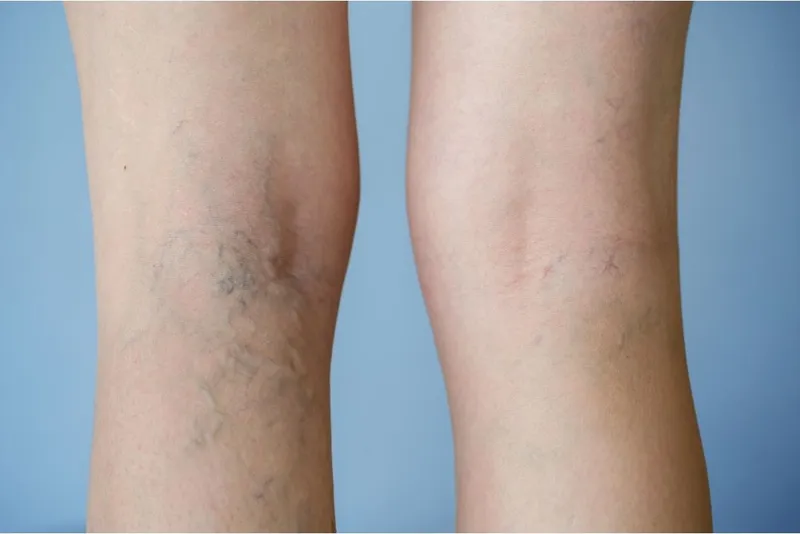
Chronic venous insufficiency (CVI) happens when leg veins can no longer pump blood back to the heart well. The most common signs are deep aching when you stand that eases when you raise your legs, swelling, itching, skin color changes and varicose veins. If you notice them, a vein ultrasound can show what is going on.
CVI is common
FCCI notes that CVI affects about 25 million Americans, roughly 5% of the US population, and that venous insufficiency in general affects about 40% of people. One big myth is that CVI is just another word for varicose veins. It is not. CVI can be linked to family history, hormones, injury and a past deep vein clot.
The signs to watch for
- Deep pain when standing that gets better when your legs are up.
- Unexplained swelling (edema), often worse by evening.
- Itchiness over the veins or lower legs.
- Red or brown skin changes, usually near the ankles.
- Weak, aching legs.
- Large varicose veins, including on the back of the thighs.
- Ulcers, which are open sores on the legs.
- A past deep vein clot, including if you have had an IVC stent placed.
For women, lower pelvic pain, veins across the belly or pelvic area, and pain during sex can also be linked to vein problems.
Why it matters
Left untreated, FCCI notes CVI can lead to swelling, chronic and serious infections of the lower legs, and blood clots. It can also make everyday things, like standing at work or walking the dog, harder than they need to be.
How it is diagnosed
A venous insufficiency ultrasound checks the direction blood flows in your veins and finds which segments are not working. It takes about an hour and may include both legs. It is painless and uses no radiation. FCCI's lab is accredited in vascular testing and staffed by registered vascular technologists.
How it is treated
Treatment depends on where the problem is. For surface veins, FCCI offers endovascular laser and phlebectomy. For deep veins, options include venography, intravascular ultrasound, venoplasty and stents in FCCI's outpatient cath lab. Your doctor will build a plan around your results and your goals.
When it is not CVI
Sometimes the symptoms look like vein disease, but the ultrasound is clear. Leg swelling and fatigue can come from other conditions. FCCI has specialists in cardiology, sleep medicine, wound care and pulmonology under the same roof to help find the real cause.
When to get help fast
A leg that suddenly swells and hurts can be a sign of a clot. Call your doctor. If you also have chest pain or trouble breathing, call 911.
Simple habits that help your legs
If CVI signs sound familiar, these habits are worth raising with your doctor:
- Take short walks through the day to work your calf muscles.
- Prop your legs up in the evening, ideally above heart level.
- Stand up or shift around during long sits.
- Ask if compression stockings make sense for your symptoms.
- Track which signs show up and when.
They are not a cure for CVI, but they are a simple place to start.
How to get the most from your visit
- Bring your insurance card, ID and every medicine you take, blood thinners too.
- List which of the signs above you notice and how long they have been going on.
- Share any history of clots, big surgeries or vein trouble in the family.
- Bring someone with you if it helps you keep track of details.
- Ask the team to check coverage for whatever treatment is recommended.
Plans change. Just give the office 24 hours notice to reschedule, and save health information for the phone or the visit itself, not online forms.
If several of these signs sound familiar, it is worth a look. Call 904.493.3333, weekdays 8am to 5pm, or use our booking page to set up a vein evaluation. Should a swollen leg ever come with chest pain or shortness of breath, call 911 instead of waiting.